SpaceX Declines Military Contracts While Starship Faces Refueling Hurdles
The company turned down three US Space Force offers, and a NASA panel indicated that lunar missions may require up to 22 orbital refueling stops.
By Aiko Yamamoto ·
The space industry is currently navigating a mix of strategic shifts and technical challenges, with major players adjusting their roadmaps in response to new data and opportunities.
In a surprising move earlier this week, SpaceX informed the US Space Force that it would not be pursuing three offered military launch contracts. This decision marks a distinct departure from the company's usual posture in government procurement. Simultaneously, on the civil side of the business, a NASA safety panel revealed that the Starship vehicle might require as many as 22 refueling operations in orbit to support a lunar landing. These developments highlight the complex trade-offs facing the industry as it balances commercial ambitions with the technical realities of heavy-lift logistics.
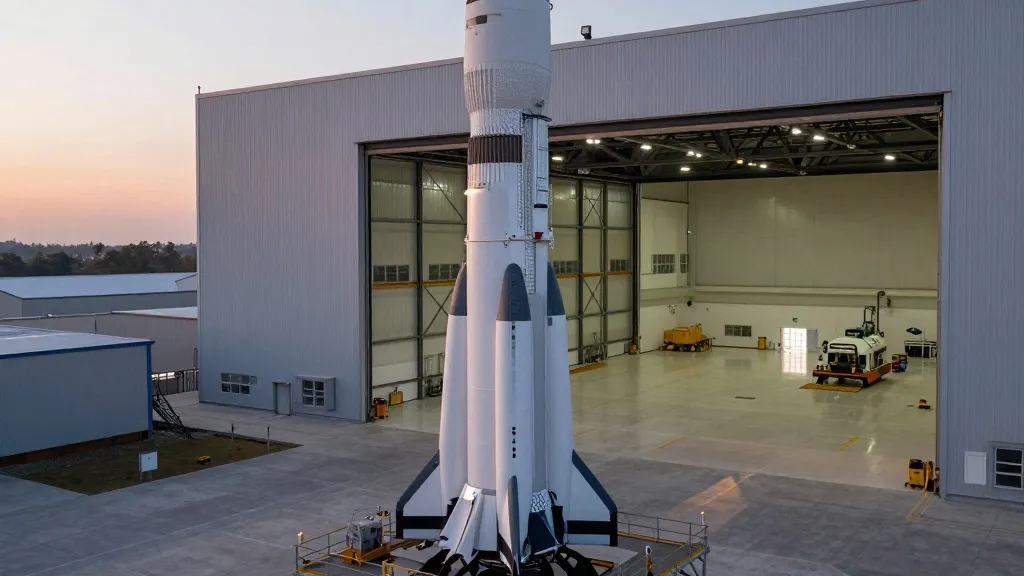
While headlines focused on the giants, smaller players are making steady progress in their own arenas. PLD Space, a Spanish rocket manufacturer, has announced that its Miura 5 vehicle is nearing final integration. The company has already built three of these small-lift rockets, with the first scheduled for its inaugural flight before mid-2027. The other two units were designed to qualify key system elements, a strategy that has allowed their engineering teams to continuously apply lessons learned from each qualification campaign directly to the launch vehicle.
PLD Space CEO Raúl Torres explained that this iterative approach has been crucial for refining their production and integration processes. Currently, one Miura 5 second stage is fully integrated and undergoing system-level testing under representative operating conditions. This stage is located at the company's test facility in Teruel, where it is undergoing a qualification campaign that includes a wet dress rehearsal and a static hot-fire test. These steps are essential to ensure the rocket's reliability before it attempts to reach orbit.
In Canada, Reaction Dynamics is moving to scale up its operations significantly. The company, which is one of three prominent launch startups in the country, is seeking to raise $350 million. This funding is intended to expand its workforce from 68 to more than 350 employees. The capital will support the development of its small-lift Aurora rocket, which the company hopes will reach orbit in 2028. Additionally, Reaction Dynamics has outlined plans for a medium-lift rocket named Borealis, with a target debut date of 2031.
These simultaneous updates reflect a broader trend in the launch industry, where both established leaders and emerging startups are refining their strategies. For SpaceX, the decision to pass on military contracts suggests a focus on other priorities, while the Starship refueling data underscores the ongoing engineering challenges of deep space exploration. Meanwhile, companies like PLD Space and Reaction Dynamics are demonstrating that the next generation of launch vehicles is coming online, with specific targets for orbital insertion and crewed or cargo missions in the late 2020s and early 2030s.
As these projects move forward, the next few months will be critical for validating their timelines. PLD Space must successfully complete its hot-fire tests to maintain its mid-2027 launch window, while Reaction Dynamics needs to close its funding round to begin its significant staffing expansion. For SpaceX, the implications of the Starship refueling requirements will likely influence future design iterations and mission planning for NASA and other partners. The industry remains in a dynamic phase, with each company balancing immediate operational needs against long-term strategic goals.
The coming weeks will provide further clarity on these trajectories. Investors will be watching Reaction Dynamics' fundraising efforts closely, as the success of this round will determine the pace of its Aurora development. PLD Space will be sharing updates from its Teruel facility as the Miura 5 second stage progresses through its testing phases. And in the US, the space community will be analyzing the impact of SpaceX's decision to decline the military contracts, potentially signaling a shift in how the company allocates its resources between commercial and government sectors.
Source: Ars Technica