Tesla Shifts Fremont Line to Mass-Optimus Production, Targets 20,000 Weekly Output
The automaker has converted its former Model S and X assembly space into a high-volume robot factory, aiming to refine AI capabilities before external deliveries begin in 2027.
By Mariana Delgado ·
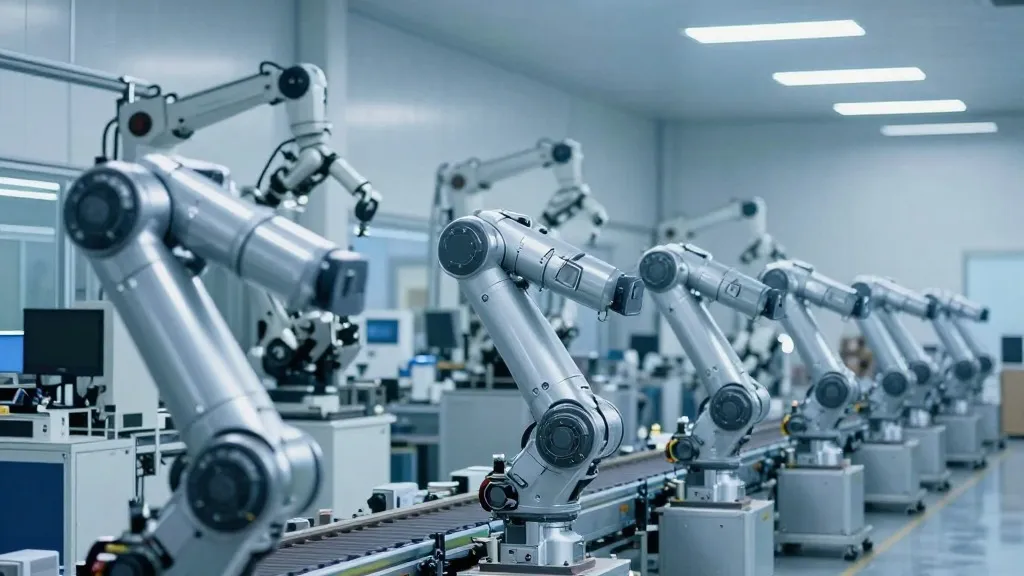
Tesla has officially commenced high-volume manufacturing of its Optimus humanoid robots on a dedicated line within its Fremont, California facility, marking a pivotal shift from prototype development to commercial-scale production. The company asserts that the units emerging from this new assembly process are the first to meet production-quality standards, signaling that the manufacturing methodology is now robust enough for a consumer and industrial market. This transition represents a significant milestone in Tesla’s long-term strategy to expand beyond electric vehicles into the broader robotics sector.
The space currently housing the Optimus line was previously used for assembling the Model S and Model X sedans and SUVs until earlier this spring. Tesla executed a rapid conversion, clearing the old vehicle production equipment in just 46 days to install machinery capable of supporting an annual capacity of one million units. During the third-quarter earnings call on Wednesday, CEO Elon Musk confirmed that the majority of the necessary equipment is already in place. He indicated that as the line ramps up, weekly output is projected to climb toward 20,000 robots, a figure that would place the program at the forefront of humanoid robot manufacturing.
Musk described the production trajectory as following a classic S-curve, noting that the initial phase will feature a shallow slope before accelerating. The engineering team is currently focused on refining the robot’s artificial intelligence, electromechanical architecture, and overall reliability. These improvements are slated for completion by the end of next year, at which point Tesla intends to begin delivering Optimus units to external partners. The target market includes companies seeking to automate dangerous, repetitive, and around-the-clock labor tasks.
A central challenge in scaling humanoid robotics is the lack of a large fleet for data collection, a resource Tesla relies on heavily for its autonomous driving programs. Unlike the millions of Tesla vehicles on the road sending real-time driving data to the AI team, Optimus does not yet possess a comparable fleet. To bridge this gap, Tesla is developing an internal system dubbed the Optimus Academy. This initiative will utilize between 10,000 and 20,000 robots to practice a diverse array of tasks, feeding the resulting data back into the model to improve subsequent iterations. Every robot produced on the Fremont line will serve as a node in this learning network.
Hardware upgrades are also on the horizon to support these AI advancements. Tesla plans to integrate its AI5 chip into the Optimus platform next year, enhancing its computational power. Musk stated that a new video demonstrating the robot executing tasks driven by AI rather than preprogrammed motions is expected within one or two months. He criticized competing humanoid demonstrations that rely on scripted routines, arguing that such methods will not withstand the complexity of real-world environments.
The supply chain for the Optimus program is solidifying as well. In September, Tesla certified Tuopu, Joyson, and Sanhua as mass-production partners for key components. Additionally, a much larger dedicated Optimus factory is under construction at Giga Texas. Recent drone footage suggests the steel framework of this new plant is nearing completion, with Musk setting a long-term target of 10 million robots per year for the facility.
Executives noted that production costs for the Optimus are trending toward the expected manufacturing costs of the Cybercab, indicating that the robot is being engineered for high-volume efficiency from the outset. However, the design of the robot’s hands remains the most difficult engineering challenge. This component has been a focal point of recent development efforts, as highlighted by Musk at the X Takeover event earlier this month, and continues to receive significant attention from the engineering team.
Source: Teslarati